http://www.rain-watersystems.com/

This site is backed by 26+ years experience and contains insider tricks for professionals and information for homeowners that can be found nowhere else. Visit my WEBSITE and " LIKE " us on Facebook to keep up on our products and activities.

My normal service range is from Santa Monica to San Diego but I have installed copper gutters and rainwater harvesting systems in California, Nevada, Utah, Hawaii and Rwanda.
I have a small but national customer base through my gutter products website @ www.abraingutters.com where I offer rare items such has handmade weather vanes and hand carved and custom family crests for gates cast in aluminum or bronze. Through my websites you can gain knowledge, order products, beautify your home or help grow your business.

Sunday, April 10, 2011

Rain Water Harvesting; The Math

The math on rain water harvesting is very important if people are to embrace this technology. A main stumbling block in my sales is that people assume that there is not enough rain in Southern California to warrant investment in the harvesting of rain water. Allow me to demonstrate that this thinking is wrong.

Please consider;
1000 square feet of roof yield 623 gallons of water per inch of rain.
The  whole calculation goes like this; Roof area (ft square) X rainfall ( ft ) X 7.48 gal/ft+ total rainwater ( gal ).

For example, if you want to calculate how much rainwater in gallons falls on your 55-by-80-foot ( 4400-square-foot) lot in a normal year where rain fall averages 12 inches. the calculation would look like this;
4,400-square-foot catchment area X 1 foot of average rainfall X 7.48 gallons per cubic foot = 32,912 gallons of rain falling on the site in an average year rain.
Credit on the above data.


So one of the key concepts is to live within your site's water budget.

That means using your properties annual average rainfall as the basis of what plants get used in your yard. Excess water collected from the roof is then used ( in theory ) to water the plants that require more than the natural rainfall ( such as fruit trees and vegetable gardens ) so that for the ornamental landscaping no further use of city water is required to have a lush and attractive yard.
Consume less water on your property than falls on your property in an average year of rainfall.


Rain water helps powers this food garden in San Clemente Califonia. 


Currently some cities offer rebates towards the implementation of rain water systems. You can help facilitate this by contacting your representative and letting them know your town wants those rebates too! Solar is far more expensive and out of reach for many into today's harsh Southern California economy.

Please consider the following;
  1. Rainwater ( and hail, sleet and snowfall ) is delivered to us free of charge, eliminating the need for costly distribution systems. Did you know that 20% of all energy consumed in California is used to transport, treat or store water?
  2. Rainwater is the highest-quality source of irrigation water
  3. Rain water is salt-free and can help flush plant damaging salts from the root zone in alkaline soils
  4. Rainwater is a natural fertilizer containing sulfur, beneficial microorganisms, mineral nutrients, and nitrogen
  5. Rainwater harvesting helps reduce utility bills
  6. Rainwater harvesting reduces flooding by reducing flow to streets and storm drains
  7. Rainwater harvesting reduces nonpoint-source pollution of stormwater
  8. Rainwater harvesting provides a water source when well, surface, or municipal water is contaminated or unreliable ( such as after a major Earthquake )
  9. Water harvesting helps utilitys reduce summer peak demands for water and reduces the volume of wastewater that needs to be treated at water treatment plants
  10. Water harvesting is fun! The food from my garden tastes better than store bought food and we have emergency water storage
This is our own family  rain garden. This year we produced onions, potatoes, strawberries, rosemarry, mint, thyme, basil, oregeno, sage, carrots and more. We just planted peppers and tomatoes for the summer growing season.

Using a three thousand square foot home in Yorba Linda California as  a model we conclude that if that home harvested just one third the home into a rain tank or cistern system they would have 8,700 gallons yield per year.  These are facts. Here is a link to the rainfall data; click here. That is 23.83 gallon of  fresh water available for use every single day.

That is why larger systems make sense.


More from our own raised flower beds this year;
lettuce and oregeno

Potatoes ( foreground ) mint and green onions

Tomatoes and fresh basil from the garden with mozzarella cheese ( yummy! )


Wednesday, April 6, 2011

Rain Water Harvesting Storage Tanks Mitigate The Big One?

Part of these blogs posts objective is to share some of the information I learn, being in the water business. The other part is to sell rain barrels. I do believe that you should consider the following information irregardless of your intentions about buying rain barrels. If you live in California, please read;


Currently there are raging debates about the delta Smelt, the California levee system and if a canal or aquaduct should be created to bypass the fragile levees. How does this effect Southern California people? Well, imagine water faucets in your home that don't work.

We know that a major Earthquake will eventually happen, and that it could destroy the levee systems and allow sea water to contaminate our drinking water. Imagine 20 million people in Southern California without drinkable water. We also know that major, even historic cuts to Californias water infrastructure loom in the immediate future. There are no plans to address any of these issues, and given the feckless nature of our political class, things will only get worse.

Of course, my interest is in getting people to change the way they think about rain and rain gutters. I confess I have an agenda. I asked Jeff Helton, the regional sales manager at Bushman rain tanks what it would take to get the average Southern California person serious about collecting and storing rainwater and his answer made sense. He said, " this tract that I live in in Murietta Valley almost didn't get built because they could not get an allocation of water. New rules say that before you can build you must plan for the water. Once they start building again the water rationing will return in full force and get people off the fence about rainwater harvesting. "

Then, as I usually do I did some research and found that in an average year, water shares were issued for eight times more water than existed. Check it out yourself;

The reality is, poor planning, incompetence and a dismal failure of leadership has set California up for a epic disaster and everybody has to do their share to reduce and conserve water, for our own sakes. We have to have our own micro-infrastructure ( our homes ) yield water to decrease the dependence on a government that fails to plan, fails to act or is planning on failure. They seem to prefer endless crisis orientated realities rather than meeting these challenges head on. We all agree that the economy will not be sound until there are homes being built, but the catch 22 is that in reality there are very few homes that can be built with our infrastructure.

key thoughts: micro-infrastructure. perma-culture. self-reliance


Get this, when you read about foreign banks and Wall Street tycoons getting trillions in so called bailouts remember; " Next year water infrastructure projects and programs are expected to see massive budget cuts as President Obama has proposed slashing infrastructure spending at the Environmental Protection Agency (EPA) and the U.S. Army Corps of Engineers; the Drinking Water State Revolving Fund (SRF) will see nearly $400 million cuts and the Clean Water SRF will be cut nearly $600 million; according to Lisa Jackson, the EPA administrator, these cuts in SRF budgets reflect a return to a more "sustainable level"; states worry that cuts will make it difficult to fund future infrastructure upgrades; reports have shown that the United States faces a $500 billion shortfall for water infrastructure funding over the next twenty years ".
Check it out here.

If the levee situation is not addressed, if more storage is not built then there can be no new construction in  California. As the above text from homeland Security indicates, the money got spent elsewhere. These decisions are going to result in massive economic hardship and potential loss of life when the big one hits and those of us in Los Angeles look to the feds to save us, like they did in Katrina.

Every home in Southern California needs to be equipped with a rain water harvesting system with at least 1000 gallons of capacity. It is socially responsible to get rid of your grass, plant native plants that are conditioned for our desert climate. Every home should have a basic gray water system where the water from their laundry discharge is fed through pipes that water food bearing gardens.
I say 1000 gallons minimum based on a typical rain year in Anaheim. You need a large capacity to carry over through dry months, to be prepared for a water disaster. The math suggests that if 1000 square feet of roof were harvested, in a typical rain year in Anaheim California that roof would yield 8700 gallons.

IMPORTANT VIDEO! PLEASE TAKE A FEW MINUTES TO WATCH.

The Cycle of Insanity: The Real Story of Water from Surfrider Foundation on Vimeo.


Supporting links;
http://www.greendiary.com/entry/earthquake-in-california-could-cause-another-katrina-in-next-50-years/
http://www.californiaprogressreport.com/site/node/8640
http://www.homelandsecuritynewswire.com/water-infrastructure-budgets-see-massive-cuts-2012

Tuesday, March 22, 2011

Water Storage = Earthquake and Emergency Preparedness

Tuesday, March 22, 2011
Earthquake Preparedness - Water is the Key to Survival! 


Loss of safe drinking water is deadly. Most individuals will begin to experience side effects from dehydration after 36 hours. Starvation can be delayed by several days or weeks provided there is an ample, safe water supply.
At the bare minimum, you should store one gallon, per person, per day, for seven days . A three-week supply is ideal.
After an earthquake, city water is vulnerable to contaminants through ruptured pipes and adulterated filtering systems. Do not take adequate water supplies for granted. If you store an ample amount for your family beforehand, you've already greatly increased your family's chance of survival after an earthquake.


I noticed with interest this picture and quote about the conflict in LIBYA;
''Residents live on canned food and rainwater tanks,' he said. Gaddafi's brigades storm residential areas knowing that they won't be bombed there. 'People live in total darkness in terms of communications and electricity.'


So, this isn't Libya; I get it. But we do live in Earthquake country and the vast majority of people I question do not realize that their tap water depends on electricity. No power = no water. The majority have no food storage beyond whats in the freezer and on the pantry shelf.  To those who think that the government will be there on a white horse to protect them should remember hurricane Katrina and the horrendous suffering of those who choose to be in denial about the impending disaster they were warned about.

So in this post Japan, post Christchurch, post Chile earthquakes we should all take stock of our capabilities. We decided to fill this 67 gallon rain tank with potable water and bolt it to the garage wall. We have three months food rations and an additional 42 gallons of water in storage, as well as protection, first aid and battery powered communication chargers, lights and radios. We also have 10 gallons of propane fuel, 40 lbs of charcoal, fertilizer and fast growing leafy vegetables in storage.


 Consider ordering one of these slim tanks to mount inside your garage as emergency water storage. They are $268.00 each plus shipping if applicable and I pay all sales tax.


Here is what FEMA has to say;

How Much Water do I Need?

You should have at least a three-day supply of water and you should store at least one gallon of water per person per day. A normally active person needs at least one-half gallon of water daily just for drinking.
Additionally, in determining adequate quantities, take the following into account:
  • Individual needs vary, depending on age, physical condition, activity, diet, and climate.
  • Children, nursing mothers, and ill people need more water.
  • Very hot temperatures can double the amount of water needed.
  • A medical emergency might require additional water.

In more remote communities or those typically affected by wildfires a water storage system may be the only water that is available to save your home. Larger tanks can be equipped with a fire hydrant outlet that the pumper trucks can hook up to.


Saved water can save your home, and maybe even your life.

Monday, March 7, 2011

Water Woes

US farmers fear the return of the Dust Bowl

For years the Ogallala Aquifer, the world’s largest underground body of fresh water, has irrigated thousands of square miles of American farmland. Now it is running dry.

The water in the Ogallala aquifer is being traded and sold by oil tycoons and mega corporations. This massive underground water deposit supplies water to the corn belt in Nebraska and other states, who in turn supply grain and corn to poor nations around the world. All the states that tap into this body of water have management plans that restrict and regulate how much can be harvested except Texas. The Lone Star state allows whoever has a right to the water to pull as much of it as they want and sell it to the highest bidder. The problem is that other states are being impacted and it trickles down to higher food prices in places that simply cannot be absorbed, like Africa and financially devastated areas in the United States. I have always been a conservative and a capitalist ( I voted for George W. Bush in both elections, and I am a gun owner and small business person ) but I now recognize that there are no limits to personal greed, and that sometimes there indeed must be sane limits to capitalism.

1997 map of the Ogallala Aquifer


If you'd care to read more about this aquifer and see other maps showing just how much this body of water has been depleted please click here.  The problem isn't just in the small town of Happy Texas where; " from the early 1950s the boom was on. Some of the descendants of Dust Bowl survivors became millionaire landowners. 'Since then,' says David Brauer of the US Agriculture Department agency, the Ogallala Research Service, 'we have drained enough water to half-fill Lake Erie of the Great Lakes.' Billions upon billions of gallons – or, as they prefer to measure it, acre-feet of water, each one equivalent to a football field flooded a foot deep – have been pumped. 'The problem,' he goes on, 'is that in a brief half-century we have drawn the Ogallala level down from an average of 240ft to about 80.'
Brauer's agency was set up in direct response to the Dust Bowl, with the brief of finding ways to make sure that the devastation never happens again. If it does, the impact on the world's food supply will be far greater. The irrigated Plains grow 20 per cent of American grain and corn (maize), and America's 'industrial' agriculture dominates international markets. A collapse of those markets would lead to starvation in Africa and anywhere else where a meal depends on cheap American exports. 'The Ogallala supply is going to run out and the Plains will become uneconomical to farm,' Brauer says. 'That is beyond reasonable argument. Our goal now is to engineer a soft landing. That's all we can do.'"  Source of quote.

So, the reality is that our senseless water policies are going to result in starvation and deaths in poor countries like Africa and result in turmoil and economic hardship for average Americans. The town of Happy Texas gets about 10" per rain a year and the choices are stark; adopt advanced permaculture crop technologies and harvest the rain or return to the dust bowl era and watch that dying town perish for once and all.

Of course, the agencies that define policy and regulate consumption can't agree on anything and there is in-fighting and politics involved in the decisions; from this article:

 "
“ Eight independent scientists worked on this report and have reached the same conclusion that real irrigation experts have been saying for years: that the water use efficiency potential in agriculture is limited.
The PPIC report is criticized because it doesn’t draw the same conclusions that the Pacific Institute wants. It is important to note that the Pacific Institute’s conclusions are based on flawed assumptions that have been identified by real irrigation experts from the California State University system and the University of California. A 2008 report by the Pacific Institute claimed that agricultural water use efficiency could generate 4-6 million acre-feet of water per year, a number they don’t even use themselves anymore because it was wrong.
Most, not all, excessive farm water is recaptured and reused. Is there still water conservation potential in agriculture? You bet. Is it all cost effective? Not yet but as water conservation technology becomes available and affordable, farmers willingly adopt it. … “

It would be amusing if the situation were not so serious. This is life and death. We have no choice but to change the way we think about and use water. The vast aquifers under California are so depleted that salt water from the Pacific Ocean is seeping into them and raising the salinity levels; crops don't grow in salt water. See here for the U.S. Geological Survey Fact Sheet # 030-02


So, what is my interest in Texas water? I obviously have a financial interest in rain water harvesting as I am a seller of barrels, but I don't sell in Texas. My interest is as a human being because I know that our policies and practices have huge impacts on other people; there will be starvation and deaths because of the United States water policy, this is not really in dispute. Wars will be fought over water.

Wouldn't be nice if we just changed the way we think?

I also don't mean to imply that there is 100% agreement on what is causing the aquifer depletion. Some scientists suggest that as the earths crust cools as our planet ages more surface water is pulled into the mantel.
There is evidence that periodically the core of the earth heats up and much of the aquifer water is expelled from the mantel causing massive and relatively sudden rising of the sea levels. If it rained for forty days and forty nights things would be really muddy and flooded, but the mountains would not be covered with water; it would take something more dramatic, like the under ground oceans unleashing their contents.
"
When the planet was young, steam came from the deep interior to the surface as volcanic gas and eventually produced today's oceans. But as Earth's interior ages and cools, it becomes easier for water to return below the surface.
"So, rather than degassing, now [Earth] may be losing water into the mantle," Sleep said.
This gradual suction of water back below the surface may be a good thing for Earth's geological stability, he notes."


You can't make the oil billionaire and corporate raider T Boone Pickens stop speculating on Texas water, but you can do your part by getting rid of grass, changing to native drought tolerant plants and capturing as much water as you can so that instead of letting the water run along paved roads and into concrete culverts you take personal responsibility and help get that water where it belongs; into the soil under your feet.
You can also write the law makers in Texas and let them know that their " right to capture " law is ignorant, outdated and is going possibly result in starvation and deaths in millions of people. Remember that Mr. Pickens is absolutely unconcerned about killing off small farming communities in his quest to make billions on water rights when you hear his name being mentioned as possible presidential material. He doesn't care about the states that surround Texas or that there are millions of Americans who are beginning to find food and fuel prices unsustainable.
Please visit www.peacewater.org and make a contribution so that they can continue to educate people, save lives and make the world a HAPPY place! It is a non-profit organization that promotes health drinking water, rain water harvesting and outreach to Churches. A.B. Raingutters is not a representative of peacewater.org and  my business is not endorsed by their organization in any official capacity. I assist the technology team in determining which efforts will be funded and implemented and am pleased to be part of the mission to Rwanda in May. 

Monday, February 28, 2011

Earthworks in Rain Water Harvesting

This provides general information on Earthworks in the context of Rain Water Harvesting ( RWH ) and in specific information about Rwanda for the Technology Team for the upcoming project www.peacewater.org is leading to help bring clean water to the people of Rwanda and beyond.
Underlined text are links to expanded information.


Rain Water Harvesting Earthworks

One of the main purposes of Earthworks in rain water harvesting is to replenish ground water storage aquifers in areas where large numbers of wells are drilled. Another purpose is to capture rainwater in terraces and directly water crops planted on them.
Excessive drilling and harvesting of underground aquifers can lead to drought and unsustainable situations for people dependent on wells for their drinking water. The must sustainable approach involves a combination of sensible and educated planning of crops and rotation, well drilling and ground water replenishment. A water harvesting Earthwork without associated vegetation is dead. It can quickly erode, clog with slit, breed mosquitos and excessively evaporate water. Vegetation stabilizes soil; roots expand, canopies grow, leaves fall and new top soil is formed. Insects attract birds and plants attract bees and the fresh water attracts wildlife completing the cycle.

Some Types of Earthworks;

Infiltration Basin

Infiltration Basins
Infiltration basins help prevent flooding and downstream erosion, and improve water quality in adjacent waterways. It is essentially a shallow artificial pond that is designed to infiltrate storm water though permeable soils into the groundwater aquifer. Infiltration basins do not discharge to a surface water body under most storm conditions, but are designed with overflow structures (pipes, weirs, etc.) that operate during flood conditions.
For in depth explanations of infiltration basins click here.


Terraces
A terrace, for the purposes of rain water harvesting Earthworks are relatively flat shelves built parallel to contour on a slope. The purpose is to create a level planting area to intercept direct rainfall and runoff from a slope and is suitable for up to a 48.8% grade but are not suitable to areas prone to waterlogging.
For in depth explanation of terraces in rain water harvesting context and beyond click here. 

Radial planted terrace in Rwanda


Water-Harvesting Swales, Soil Conservation Swales and Diversion Ditches
Diversion Swales and soil imprinting are more likely used in areas where preventing or reversing desertification is the issue.
A 'swale' is simply a long, shallow depression in the ground, designed to collect or redirect water. In general, permaculture swales are used to mimic the water-collecting and -holding abilities of a thick forest mulch.
Swales are most useful in reforestation of degraded, mostly-bare, arid or semi-arid hillsides, to direct water to trees (this water would otherwise run off the bare soil and be lost to the local landscape). In a healthy forest with a thick mulch of leaves or needles covering the ground, very little runoff occurs and swales would usually be unnecessary. A healthy forest is very good at managing its own water resources, and it is usually only Earth that is stripped of vegetation that needs to be rehabilitated.
For permacultural purposes, there are three main types of swale used in water-management earthworks:
  • on-contour, water-harvesting permaculture swales;
  • gently sloped water-transporting swales (or diversion ditches); and
  • soil conservation swales (a modified form of diversion ditch).
  • For an in depth explanation of bio-swales click here. 

Bioswale


Check Dams


A check dam is a small dam, which can be either temporary or permanent, built across a minor channel, swale, bioswale, or drainage ditch. Similar to drop structures in purpose, they reduce erosion and gullying in the channel and allow sediments and pollutants to settle. They also lower the speed of water flow during storm events. These features help the root systems of plants upslope of the check dam by charging the water into the soil.
Check Dam


For a expert explanation of a check dam click here.


Desertification in Rwanda?

The U.N. Plan

The Government of Rwanda , in 2010- guided by a UN pilot project that mapped and developed a comprehensive plan for land suitability and use - has allocated US$25 million to relocate human settlements from the Gishwati Forest. Those resources were expended to correct years of deforestation that is causing erosion, landslides, deaths and poor water quality.
A knowledge base about the importance of vegetation and rain water harvesting Earthworks would possibly have rendered these millions available for use elsewhere. Application of these concepts may save hundreds of millions of dollars going forward.

The NASA study

1978, the Gishwati Forest had substantial ground cover and still remained largely intact in 1986. But in the 15 years that elapsed between the genocide and 2001—wave after wave of refugees arrived in Gishwati Forest and began clearing it, often for subsistence farming. By 2001, only a small circular patch of native forest remained—1,500 acres of the forest’s original 250,000. To view photos and read the NASA study, click here.

Not so much an issue in the near term, but in the long term erosion, water quality and food resources all stand to be major issues and can be mitigated through the use of rain water harvesting Earthworks.


For further reading please see Brad Lancasters website.


Sunday, February 6, 2011

How to Attract Humming birds in los Angeles

It's hard to say how much is spent every year on bird feeders, or fertilizers for lawns but an estimated 40% of residential water usage every year in Southern California goes to water lawns and landscapes. Often these areas are heavily fertilized and the run off usually goes into concrete culvers for treatment in tax subsidized water treatment plants. 20 % of the energy consumed in California goes for the transport, treatment or distribution of drinkable water.
Meanwhile, the natural life we claim to love and respect must look elsewhere for its nutrition. Here then is my suggestion on how to attract wild life and conserve water.


 To attract hummingbirds; first get rid of your grass. Plant succulents and flower bearing annuals native to the region. The flowers of these native plants will please our eyes and they will attract wildlife. Bark, mulch and stone make up the balance of the landscape.


I know, this concept is uncomfortable but imagine paying less for water and having an award winning yard...


Grass is not just unwise, it is bad for the environment.

 Once drought tolerant plants are established and healthy you really need no more than rain water to keep them beautiful. A irrigation system incorporating rain and city water can be turn key. These landscapes will support the natural ecosystem by providing bees with pollen and hummingbirds with natural organic nectar. They are also beautiful.

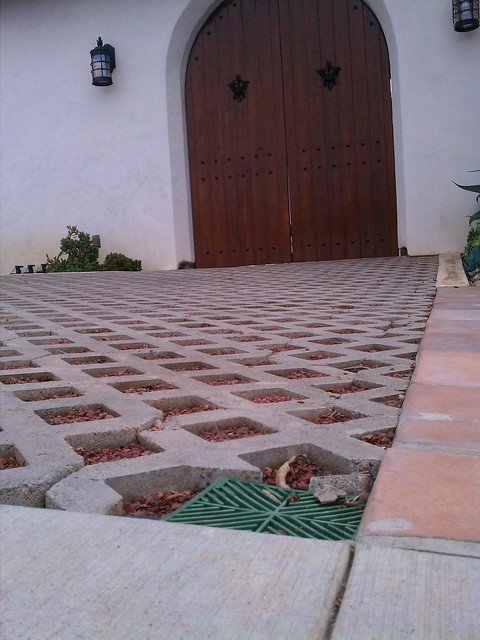
A further step is to eliminate oil based black top or concrete driveways and replace with permeable surfaces that absorb water and  divert the excess to infiltration basins in planted terraces;


Downspouts should be positioned near a drain that feeds lower flower boxes or planters. This downspout feeds the flowers near it and when that planter is full it feeds a drain that collects water from the walkway and to a lower planter; the downspout about and the enclosed planter here;


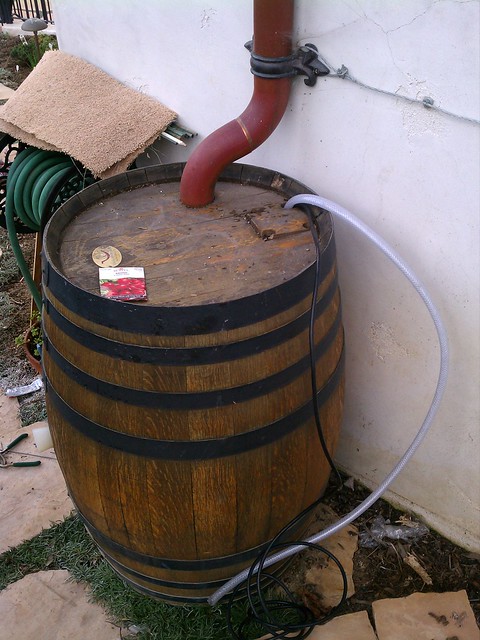
An attractive addition to this water garden is a wine barrel from a Temecula winery;


I hand made the bronze fluer-dis-lis brackets and preparred the wine barrel by adding the inlet, a spigot, a overflow and the plug in pump, visible at the base.


Please consider watching this video about the ignorant way we manage our resources and see my website at www.abraingutters.com

Photos of the above project can be found here; 


The Cycle of Insanity: The Real Story of Water from Surfrider Foundation on Vimeo.

Thursday, January 20, 2011

Watch out, they're making a new law about rain water harvesting.

WHY AM I AFRAID?
Well for one, the law basically states that only landscape contractors are going to be authorized to install rainwater harvest systems. hello?! I'm a rain gutter contractor. Now I will be forced to get a general contractors license. For another thing, if the homeowners are required to go to a miserable government agency, pay a fee and then be subject to inspections they are likely to say forget it and not harvest rain at all. Cannot the government just for once get out of the way? California state officials have proven that if they get involved they will over complicate, over tax and over regulate, just like they do with anything else.

From Arcsa:
California's Hope To Enter the Rainwater Harvesting Paradigm
By Neal Shapiro, CSM - ARCSA Member 

2011 could become a "watershed" year for California with the passage of AB1834, literally.  While many states, and other industrialized countries, have and continue to move toward a more sustainable approach to local water management, California has been silent on regulations to permit rainwater and stormwater harvesting for indoor and outdoor non-potable and potable end uses at a critical period when reliance on imported water resources is unreliable and unsustainable state-wide.  While the state water code defines potable, recycled and gray water resources, it is silent on rainwater and stormwater.  Some interpret this to mean that their uses are allowed, though no uniform set of guidelines and regulations, permitting and inspections exists to provide a regulatory system that is user-friendly to those who want to use these local water resources.  Due to this void, to make this a permissible activity, regulations for another water resource are used to formulate a regulatory framework, resulting in a cumbersome system that is a regulatory maze, cost-prohibitive and fails to promote a sustainable activity.  AB1834 will provide a uniform standard for rainwater harvesting and use, and give flexibility to local agencies to implement this sustainable strategy.  At a time when the state and the western United States continue to face drought, adding a local water resource to the overall water management mix is a welcome, necessary, and bold step.

AB1834 is expected to be re-introduced by Assemblyman Jose Solorio (D-Santa Ana, 69th District) into the state legislature in the first quarter of 2011.  The bill defines rainwater, rainwater capture system (systems on a parcel, onsite catchment), stormwater and stormwater capture system (systems with offsite catchment from the MS4 and surface waters); it will allow indoor and outdoor end uses; and it focuses on rainwater use on private and public parcels.  Stormwater applications are not authorized due to the need for a stakeholders' discussion on how stormwater harvesting impacts the balance between local uses and water rights of water agencies.  Western water law is a unique challenge for many states and locales when it comes to rainwater-stormwater harvesting.  Utah and Colorado are two examples where this has become a roadblock for rainwater harvesting.  And it could be in California areas where surface waterways are used for recharging aquifers.  A small group of interests, including non-governmental organizations, cities, and water agencies, has been working with the Assemblyman's staff to craft a bill that at a minimum can put California on a preliminary sustainable water management path.  Once this bill is passed and positive experience is gained, further steps can be taken to expand rainwater uses to larger government stormwater use projects and potable applications.

In the meantime, some rainwater harvesting programs exist around the state.  San Francisco, the city and county of, passed a Memorandum of Understanding in 2008 that establishes a legal framework for rainwater harvesting projects for non-potable indoor and outdoor intended uses.  This MOU is unique because it involves the city and county, building and public health offices, and the public utility commission.  The cities of Los Angeles and San Diego did pilot projects and studies to determine the effectiveness of a permanent rainwater harvesting program.  Santa Monica has a rebate program for downspout redirect, rain barrels and cisterns.  Berkeley has a very effective rainwater harvesting regulatory framework.  And in Southern California, as a region, a small group of cities, LA County Public Works and Public Health, and NGOs have been working for a few years to develop a matrix that allows for a limited number of applications for rainwater and stormwater and under specific filtering and disinfection standards; this document has not been approved.

Indeed, California is on the brink of a significant and bold step toward sustainable water management at a critical time of water supply uncertainty and of climatic change influencing precipitation patterns.  Given the urgency of creating a uniform legal framework for rainwater and stormwater harvesting, 2011 is our year in California for a Rainwater Catchment Act.
AB 1834 (Solorio)
Rainwater Capture Act of 2010.
FULL TEXT 
AB 1834, Solorio. Rainwater Capture Act of 2010.
(1) Under existing law, the State Water Resources Control Board
(state board) and the California regional water quality control
boards prescribe waste discharge requirements for the discharge of
stormwater in accordance with the national pollutant discharge
elimination system (NPDES) permit program and the Porter-Cologne
Water Quality Control Act. Existing law authorizes a regional water
management group, as defined, to adopt an integrated regional water
management plan that addresses specified matters. Existing law
authorizes a city, county, or special district to develop, jointly or
individually, stormwater resource plans that meet certain standards.

This bill would enact the Rainwater Capture Act of 2010, which
would authorize a landowner to install, maintain, and operate, on the
landowner's property, a rainwater capture system meeting specified
requirements. The bill would authorize a public agency to lead a
statewide stakeholder process to consider and address issues arising
out of expansion of rainwater and stormwater capture. The bill would
require participants in the stakeholder process to be responsible for
costs incurred as a result of their participation and would require
the initiating public agency to be responsible for specified costs.
(2) Existing law, the Contractors' State License Law, creates the
Contractors' State License Board within the Department of Consumer
Affairs and provides for the licensing and regulation of contractors.
Existing law authorizes a landscape contractor working within the
classification of his or her license to enter into a prime contract
for the construction of a swimming pool, spa, or hot tub, an outdoor
cooking center, or an outdoor fireplace, if certain conditions are
met. Under existing law, a violation of these provisions and related
provisions of existing law is grounds for disciplinary action.
This bill would additionally authorize a landscape contractor
working within the classification of his or her license to enter into
a prime contract for the construction of a rainwater capture system,
as defined, if the system is used for landscape irrigation. The bill
would authorize a landscape contractor holding a specified
classification to design and install all exterior components of a
rainwater capture system that are not a part of, or attached to, a
structure.


THE PEOPLE OF THE STATE OF CALIFORNIA DO ENACT AS FOLLOWS:

SECTION 1. Section 7027.5 of the Business and Professions Code is
amended to read:
7027.5. (a) A landscape contractor working within the
classification for which the license is issued may design systems or
facilities for work to be performed and supervised by that
contractor.
(b) Notwithstanding any other provision of this chapter, a
landscape contractor working within the classification for which the
license is issued may enter into a prime contract for the
construction of any of the following:
(1) A swimming pool, spa, or hot tub, provided that the
improvements are included within the landscape project that the
landscape contractor is supervising and the construction of any
swimming pool, spa, or hot tub is subcontracted to a single licensed
contractor holding a Swimming Pool (C-53) classification, as set
forth in Section 832.53 of Title 16 of the California Code of
Regulations, or performed by the landscape contractor if the
landscape contractor also holds a Swimming Pool (C-53)
classification. The contractor constructing the swimming pool, spa,
or hot tub may subcontract with other appropriately licensed
contractors for the completion of individual components of the
construction.
(2) An outdoor cooking center, provided that the improvements are
included within a residential landscape project that the contractor
is supervising. For purposes of this subdivision, "outdoor cooking
center" means an unenclosed area within a landscape that is used for
the cooking or preparation of food or beverages.
(3) An outdoor fireplace, provided that it is included within a
residential landscape project that the contractor is supervising and
is not attached to a dwelling.
(4) A rainwater capture system, as defined in Section 10572 of the
Water Code, used for landscape irrigation.
(c) (1) Work performed in connection with a landscape project
specified in paragraph (2), (3), or (4) of subdivision (b) that is
outside of the field and scope of activities authorized to be
performed under the Landscape Contractor (C-27) classification, as
set forth in Section 832.27 of Title 16 of the California Code of
Regulations, may only be performed by a landscape contractor if the
landscape contractor also either holds an appropriate specialty
license classification to perform the work or is licensed as a
general building contractor. If the landscape contractor neither
holds an appropriate specialty license classification to perform the
work nor is licensed as a General Building contractor, the work shall
be performed by a Specialty contractor holding the appropriate
license classification or by a General Building contractor performing
work in accordance with the requirements of subdivision (b) of
Section 7057.
(2) Notwithstanding paragraph (1), a landscape contractor
performing work under the Landscape Contractor (C-27) classification,
as set forth in Section 832.27 of Title 16 of the California Code of
Regulations, may design and install all exterior components of a
rainwater capture system, as defined in Section 10572 of the Water
Code, that are not a part of, or attached to, a structure.
(d) A violation of this section shall be cause for disciplinary
action.
SEC. 2. Part 2.4 (commencing with Section 10570) is added to
Division 6 of the Water Code, to read:

PART 2.4. Rainwater Capture Act of 2010


10570. This part shall be known, and may be cited, as the
Rainwater Capture Act of 2010.
10571. The Legislature finds and declares all of the following:
(a) As California has grown and developed, the amount of
stormwater flowing off of buildings, parking lots, roads, and other
impervious surfaces into surface water streams and flood channels has
increased, thereby reducing water allowed to infiltrate into
groundwater aquifers and increasing water and pollution flowing to
the ocean. At the same time, recurring droughts and water shortages
in California have made water conservation efforts a priority.
(b) Historical patterns of precipitation are predicted to change,
with two major implications for water supply. First, an increasing
amount of California's water is predicted to fall not as snow in the
mountains, but as rain in other areas of the state. This will likely
have a profound and transforming effect on California's hydrologic
cycle and much of that water will no longer be captured by California'
s reservoirs, many of which are located to capture snowmelt. Second,
snowmelt, and runoff resulting from snowmelt, are predicted to occur
progressively earlier in the year, and reservoirs operated for flood
control purposes must release water early in the season to protect
against later storms, thereby reducing the amount of early season
snowmelt that can be stored.
(c) Rainwater, captured and properly managed, can contribute
significantly to local water supplies by percolation into the ground
to recharge groundwater aquifers, thereby increasing available
supplies of drinking water. In addition, the use of rainwater through
onsite storage and use for landscape irrigation significantly
reduces the demand for potable water, contributing to the statutory
objective of a 20-percent reduction in urban per capita water use in
California by December 31, 2020.
(d) Expanding reliance on rainwater capture for water supply needs
will require efforts at all levels, from individual landowners to
state and local agencies and watershed managers.
10571.5. Nothing in this part shall be construed to do either of
the following:
(a) Alter or impair any existing rights.
(b) Change existing water rights law.
10572. Solely for the purposes of this part, and unless the
context otherwise requires, the following definitions govern the
construction of this part:
(a) "Agricultural lands" has the same meaning as defined pursuant
to Section 56016 of the Government Code.
(b) "Developed or developing lands" means lands that have one or
more of the characteristics described in subparagraphs (A) to (C),
inclusive, of paragraph (4) of subdivision (b) of Section 56375.3 of
the Government Code.
(c) "Rainwater" means rain or snowmelt that has not entered an
offsite storm drain system or channel, a flood control channel, or
any other stream channel, and has not previously been put to
beneficial use.
(d) "Rainwater capture system" means a facility on developed or
developing lands, but not on agricultural lands, designed to capture
and retain rainwater flowing off of a building, parking lot, road, or
any other manmade, impervious surface, for either subsequent
outdoor, nonpotable uses or infiltration into a groundwater aquifer.
(e) "Stormwater" means temporary surface water and snowmelt runoff
generated by immediately preceding storms. This definition shall be
interpreted consistent with the definition of "stormwater" in Section
122.26 of Title 40 of the Code of Federal Regulations, as that
section may be amended.
10573. (a) A landowner may install, maintain, and operate, on the
landowner's property, a rainwater capture system to supply water for
outdoor, nonpotable uses on the property where the rainwater was
captured or for groundwater recharge. If a local agency has a program
to promote rainwater or stormwater capture and use, the landowner
shall comply with applicable requirements of the program, including,
but not limited to, a stormwater resource plan adopted pursuant to
Part 2.3 (commencing with Section 10560).
(b) Financing pursuant to Chapter 29 (commencing with Section
5898.10) of Part 3 of Division 7 of the Streets and Highways Code
shall be available to landowners who install a rainwater capture
system, if a local agency authorizes and arranges that financing
consistent with the requirements of that chapter.
(c) This section shall not be construed to impose a duty on, or
impair the authority of, a local agency to establish or implement a
program for rainwater capture in its jurisdiction.
10574. (a) It is the intent of the Legislature that the use of
rainwater for nonpotable uses should not be constrained by drinking
water standards in Title 22 of the California Code of Regulations,
but shall fully comply with water quality requirements for nonpotable
water pursuant to the Porter-Cologne Water Quality Control Act
(Division 7 (commencing with Section 13000)).
(b) Notwithstanding subdivision (a), this part does not affect any
additional state, regional, or local requirements for the protection
of groundwater quality from contamination resulting from stormwater
drainage.
10575. (a) It is the intent of the Legislature to encourage
collaboration among state, regional, and local agencies with
responsibilities that include, but are not limited to, building
standards, flood protection, water supply, or land use to promote
greater capture of rainwater and stormwater for water supply
purposes.
(b) It is the intent of the Legislature that the California
Building Standards Code, including the California Green Building
Standards Code (Part 11 (commencing with Section 101) of Title 24 of
the California Code of Regulations), encourage and provide building
standards guidelines for the installation and use of rainwater
capture systems for outdoor, nonpotable uses and groundwater
recharge.
10576. (a) The Legislature finds and declares that, in order to
expand rainwater and stormwater capture broadly, many legal, policy,
and technical issues will need to be addressed and resolved, and the
best way to address these issues is to develop recommendations for
policies of state and local agencies that would encourage and
facilitate the voluntary installation and use of rainwater capture
systems for outdoor, nonpotable uses and groundwater recharge, and
capture of stormwater by public agencies.
(b) A public agency, including, but not limited to, the
Metropolitan Water District of Southern California or the California
State University Water Resource and Policy Initiative, may lead a
statewide stakeholder process to consider and address the issues
arising out of the expansion of rainwater and stormwater capture. If
a stakeholder process is initiated, the initiating public agency
shall invite all stakeholders, and federal, state, and local agencies
concerned about rainwater and stormwater capture to participate.
(c) A stakeholder process initiated pursuant to this section may
consider all of the following issues:
(1) Vector control.
(2) Water supply augmentation.
(3) Water quality, including but not limited to both of the
following:
(A) First rain contamination hazards.
(B) Potential changes in the concentration, quantity, or abundance
of runoff pollution from increased rainwater collection.
(4) Safe installation, maintenance, and operation of rainwater
capture systems.
(5) Water rights.
(6) Vegetation and habitat management in flood control facilities
and rainwater or stormwater capture systems.
(7) Effects on downstream, in-stream flow volumes and native fish
and wildlife.
(8) Consistency with building standards requirements, including
the building drainage requirements of Chapter 11 of the California
Plumbing Code (Part 5 (commencing with Section 101.0) of Title 24 of
the California Code of Regulations).
(9) Potential for indoor, nonpotable use of captured rainwater for
toilets and laundry.
(10) Financial and tax incentives to encourage greater capture of
rainwater and stormwater.
(11) Necessary monitoring and reporting of rainwater and
stormwater capture programs.
(12) Outcomes of existing programs that promote rainwater or
stormwater capture.
(13) The financial feasibility of each of the recommendations.
(d) Participants in the stakeholder process shall be responsible
for costs incurred as a result of their participation. The public
agency that initiates the stakeholder process shall be responsible
for the costs of the meetings and the preparation of any report on
the conclusions or recommendations of the stakeholder group.