http://www.rain-watersystems.com/

This site is backed by 26+ years experience and contains insider tricks for professionals and information for homeowners that can be found nowhere else. Visit my WEBSITE and " LIKE " us on Facebook to keep up on our products and activities.

My normal service range is from Santa Monica to San Diego but I have installed copper gutters and rainwater harvesting systems in California, Nevada, Utah, Hawaii and Rwanda.
I have a small but national customer base through my gutter products website @ www.abraingutters.com where I offer rare items such has handmade weather vanes and hand carved and custom family crests for gates cast in aluminum or bronze. Through my websites you can gain knowledge, order products, beautify your home or help grow your business.

Wednesday, June 1, 2011

Rwanda trip journal, part 1


 The gist is we are using donations to fund rainwater harvesting on churches in Rwanda and part of my role is to help put together a training manual that others can use and hopefully other teams doing similar work will find this useful. These first parts contains the story. A future post will have the technical information on how to install rainwater systems in the third world. Rainwater harvesting combined with Sawyer filters brings clean drinkable water.
My role is the “ rain water catchment specialist “, which is a fancy way of saying I am a gutter guy. I have been doing this for almost 26 years and have done just about everything a person could possibly do with that. I had often wished my life had been spent doing something else as gutters are not that glamorous. But you know what? It could be that all along this was my purpose and that all those years of hard work were not as meaningless as they sometimes felt.
I never imagined I would be here, or that something as mundane as rain gutters could benefit people in such a fundamental way as providing them drinking water. The catchment ( gutters ) combined with the other technology like the filtration means that some will not have to go to the ditch as I see them do now and fill their jugs. The team members Pete and Joel are awesome. There is no friction whatsoever. Larry is here guiding the way and his job is complicated. Makes mine look like child’s play. Perhaps that’s why he refers to us as his children.
This is a wonderful experience and if you ever get a chance to come here, do it.
More to come when I can.


LAX May 26th
En route to Kigali Rwanda aboard a 757. First to Washington D.C., then to Brussels and then an overnight flight to Kigali Rwanda. We will spend Saturday in Kigali getting our supplies and funds converted. Then we take a 3 hour drive to the city of Kibuye where we will work.


On board are the other members of my team Joel and Pete and another team of four. I am nervous about the twenty hours of flight and my ability to let go of life back home. I miss the wife and kids already. I am hoping that my own, and the teams goals are achieved.

Washington D.C. May 26th
Pete and I almost missed the flight. First they said we had 45 minutes so we grabbed some food, but on international flights I guess they depart when the bulk of the passengers are on board and we made it to the gate about two minutes before they closed the door.
We are now over the Atlantic. This flight seems like it has been going on four six hours but it has only been two. The wife was concerned that I might have some reaction to the sudden detox, and I was too, but not much. I am a creature of habit and I had let some habits get the better of me. I am taking some vitamins and herbs to help with depression. Yes. It’s been four years now since the great recession started and I feel exhausted from the stress. It is a weird place to be; wife, kids, house; but hardly any income. Ah well. The bond between my wife and kids has actually gotten stronger. I kept looking at her expecting her to have had enough and up and bail, but she is actually proving daily that I made a good choice in a wife. Part of what I am doing is trying to force a change in myself and my ways of thinking. She and those two precious kids of mine deserve it.
It was so strange to leave D.C. in the afternoon, see it get dark for two hours out the window and then have the dawn sky rise. It doesn’t feel like we have been up all night, but I at least have not slept for more than one hour. I believe we are somewhere over England now. I can only see a red dawn and a thick layer of clouds. I had requested a window seat but on both planes so far we have all had aisle seats. That was a good lesson for a long flight and here is the first example of the trip of Larry McBrides experience; it is way better to have an aisle seat. You have better leg room and it is easy to get up and walk around. I just listened to some dramatic music for five minutes on the airplane headphones and was hooked until the singing started; I can’t understand whatever it is. The same thing with the cabin announcements from the pilot. Everything is said in English, French and Dutch.
So far I have a bit of a tummy ache and I feel three stages past tired, but I still can’t get any rest as just when I begin to nod off somebody in our aisle of five seats needs to get up. The plane has two seats on each side and a row of five in the middle. We are sitting next to a father and son who appear to be from Africa as they are the best dressed on the plane. Pete explained it best; all that they have is their clothes. Most do not have cars or property so they dress very formally and keep themselves very nice. The dad has a three piece suit on. You just don’t see that a lot.

Now I try and sleep again. We are one hour from our second stop in Brussels , looks like maybe over Ireland based on the map on the seat in front of me.


45 minutes from Kigali
That was the best airplane food I have ever had. The American airline companies should take a lesson from Brussels air. There was a delicious pasta salad with some sort of turkey sandwich that tasted amazing. The food on United was flavorless microwaved glop. I would love to be able to spend a day sightseeing. The buildings and farms all look so quaint.


I lucked into a window seat on the flight to Kigali and I have spent the time awake with my nose to the window. I could not see any of the towns that show on the plane map, but I could see the Nile river, and huge flows of volcanic rock poking out from sand dunes. What appears to be single lane roads lead for hundreds of miles away from the water. I couldn’t help but think of the conflicts in Libya and Yemen as we flew over. In the minds eye I imagined tracer rounds shooting up at us, or perhaps a guided missile but that world is far below and they are oblivious to us.


I can feel my work issues fading. I don’t think I will have any room in my brain for the troubles that have been bogging me down at home. The people I am traveling with are awesome. There is not a hint of discomfort I feel with any of them. Now the sun is setting and it is getting dark. Not a single light can be seen on the ground.
We are now 33 minutes from meeting Larry at the airport.
First night in Rwanda


We were greeted at the airport by Larry. He seemed glad to have some company. I could only see the few miles that led from the airport. There are police in yellow vests and radios everywhere and about every quarter mile there is a soldier with an AK-47. It is all very surreal. The soldiers look spiffy in their black berets, but there is a hardness, a humorlessness to them. I hope to get a picture with one. You get the sense that if the country suddenly went insane again there is not much you could do besides hide. There are many little salons and shops and bars. If one had to party there is ample opportunity. The hotel where we are staying is sort of a church too. Not really clear on that.


There are beautiful new buildings being built within a stones throw of shacks with no power, as far as I can see. The main form of theft deterrence is shards of glass set into the mortar on top of all the brick walls.

Most places have walls, as if the memory of the roving bands of blood thirsty militias are not so distant. There are cell phones everywhere. Walking at night was strange. Joel was carrying about 14k in U.S. dollars and the other team about the same. I guess crime isn’t much of an issue. The black case Joel was carrying had our project funds.


Tomorrow we wake up and go for a walk as the city is shut down until noon for community service. I guess people have a choice on that one weekend a month; you either clean up something, help build something or you stay out of site. Joel was supposed to come here last year but that trip was cancelled because there was an election going on and the main opposition dude was found sans head, and there was concern that the madness would return. I guess there are free elections, as long as you vote for the guy they want you too. The people here express faith and love for their president. I wish it were like that where I live. I have little doubt that if somebody tried to assassinate the president hell would be unleashed again. We had a nice diner a few hundred feet from where we are staying.

There was beef, fish, rice and potatoes. I guess many Rwandans only eat meat on religious holidays, perhaps 2-3 times per month. Obesity is a non-issue, all the men are stick thin and there are large boned tough looking girls but they don’t have the luxury of gluttony. The place we ate had a full bar and wireless internet. It was spotless and the decorations were a casual African cool.

Beat. Shower and sleepy time. I am happy there is security glass on the walls where we are staying.


Kibuye, Day One
We started today with the best coffee I have ever had and then walked up to the “ Hotel Rwanda “ which is actually named something else.

It was a beautiful place with a full bar and huge swimming pool. There are no signs of the war. As we were loading the bags cars rounded the corner with lights flashing and men with guns. They must have been doing fifty down the street and we all scrambled to get the doors shut on the vehicles as the driver said, because who it was was the president of Rwanda. I guess they drive like maniacs to make a smaller target. Then we went to the market in Kigali to exchange money and get water and anything else that had been forgotten, i.e. I forgot shampoo and Pete forgot toothpaste. When we pulled up to the car a mother nursing a baby came up and, it was an instinctual reaction, I handed her my bag of trail mix and some change. Biggest mistake thus far of the trip; within seconds a half dozen mothers with nursing babies surrounded the car, pointing to their children and then to their own stomachs. Then a boy about five came up and shook his stump of an arm at us and said he was very hungry. So, the ladies had to sit and try to ignore the mothers as they stood inches from the car, staring and pointing to their babies while Larry and company exchanged about 14k in American hundred dollar bills into Rwandan francs. The market had all you could need and even had a machete section.

Somewhat disturbing, seeing a stack of the long curved blades. I may actually buy one as they were only $3.00.

Then we went to the genocide museum.


It was a respectful and somber place. That day happened to be the national day of mourning so there were many fresh displays of flowers and, a crowd carried in a small box of just recovered bones to be interned with the other 275,000 or so human beings placed on a space no bigger ours and our neighbors house and yards combined.


I guess they are still finding bodies all over. The family was about fifty or so members dressed in beautiful African best; traditional robes and elaborate head pieces on some of the ladies. Apparently they go to the perpetrators and offer them money to reveal where their relatives were killed. Sometimes the bodies can be recovered.


The pictures at the museum were much more hardcore than anything you’d ever find on the internet. Children with machete hacks in their skull that somehow survived by being left for dead and pulled from the piles of their mothers and fathers by the rare heroes of the carnage, piles of horrifically chopped bodies, some with outstretched hands with deep slices in their palms that were obviously defensive wounds and the unbelievable remains of decaying bodies that were left for months to rot, heaped in piles inside churches.

I have now seen true hell on Earth and the remains of unimaginable carnage with my own eyes. I think I have seen one person that looked over forty. That entire generation almost, is gone. I thought the pictures of the faces, the clothes of the victims and the room of remains was bad, but what really kicked me in the groin was when I went to see The Wall Of Names; of the 275,000 bodies there, I saw a list of maybe a thousand or so names. The rest of the wall was blank.

The death toll had to be much higher, because many latrines and pit toilets were filled with bodies, or had live people thrown in them, and then rocks tossed in until they stopped screaming, and it is unlikely that they could have recovered them all. Some families were chained together and buried alive. It makes me sad to think of all the people, the good people like our interpreter and good friend Jasque who is a Rwandan presidential scholar, or C.W.I's ( stands for clean water initiative ) in country person named Jados who were murdered for a stupid and pointless reason.
The initial method that the scum French used to determine who was Hutu and who was Tutsi was simple; if you had over ten cows you were considered a Tutsi and your name was put on a list. I really have no words to describe my feelings for the Catholics and the other so called pastors who participated in the slaughter. The French will forever be tainted in my mind.

The second memorial we stopped at was a former catholic church site where an unknown number of people were entombed. About a thousand Tutsi and moderate Hutus were inside the church when the pastor demanded that all the Hutus leave. Some of the Hutus were married to Tutsis or were friends and neighbors and they refused to budge so the pastor hired a man with a bulldozer, who didn’t want to knock down the walls until the pastor assured him that a replacement would be built, and then he knocked the walls down in on the thousand victims and ran his tractor over the rubble until they were all dead.
The man had no problem with the killing, he just didn’t want to ruin his church. The school building still stands with the long empty rows of seats. I looked through the glass and imagined the echoes of the children.

The drive to Kibuye was not like I imagined as all along the way there were people. I don’t think we went more than two minutes without seeing a person and the majority carried the old diesel fuel cans that many use to carry water. There was a man with a wooden bicycle, many women with high loads balanced on their heads and lots of children.


I have a private room with a view of the lake but no internet. We will be here for almost two weeks so I am fully unpacked and appreciating the privacy. Now my eyes blur and fatigue overwhelms me. The only toys I have seen are metal rings which the boys push along with a stick. I see boys four or five years old working in the fields, carrying water and forced to beg, yet they greet us with big waves and warm smiles. It is hard to believe what evil these beautiful people committed; the crime just doesn’t match the happy faces we see everywhere.
Tomorrow we scout our locations and go to church.


SUNDAY


Ya, wow. It is hard to describe today.


The church service was a powerful experience. To see people living in such poverty, yet filled with such joy. They first look at us with wonder, like, who are these people and why are they here. We walked in like rock stars and when we were introduced there was a respectful round of applause. Then it came time for us to speak and Larry whipped them into a fever within about one minute.
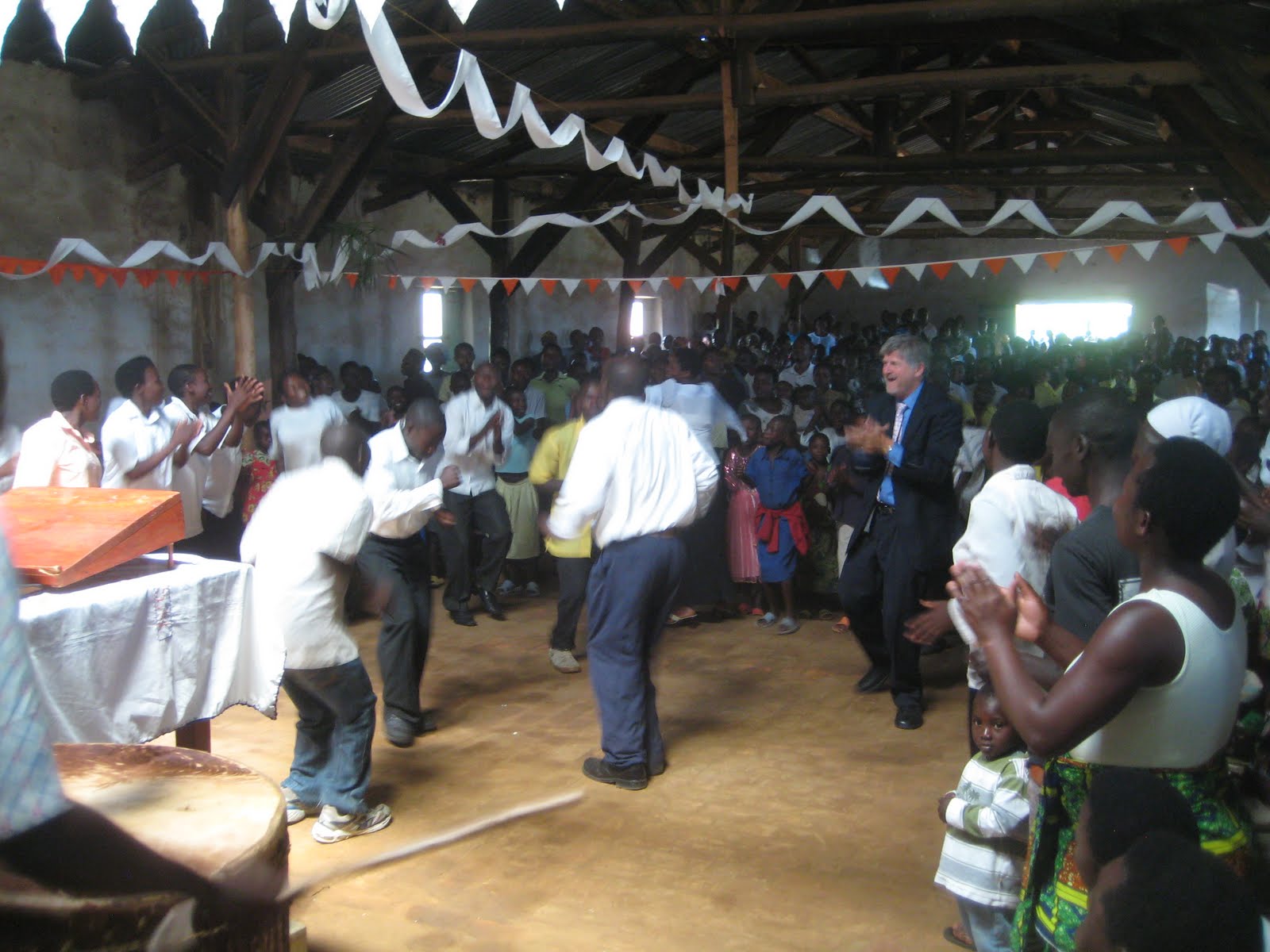
Joel got up to speak and it was not quite the same effect. Pete and I just waved from the podium when it was our turn. The sound of the singing was…beautiful. They danced and clapped like nothing you can even imagine. The pastor beat a metal drum. The olfactory senses were assaulted as it was a packed house with no electricity and few windows. I would not want to be in there come summer time.
One of the old women sitting close to us ( center left, below and left of the guy

with the cabbage in the white shirt ) had a large scar on the side of her head from a machete wound. We had a translator ( who will visit us when he returns to California ) who tried to keep us informed about what the songs were saying; “ don’t give up, no matter how hard life is you must keep trying…”. Afterwords we visited the pastor at his home. No power. No plumbing.


I can see that Peacewater has some huge challenges. So far there are no churches that are able to buy into their own rainwater catchment systems. When you are person who attends a mud church with log rafter beams and pays tithing with husks of corn or a few lemons and your children have scabbies and live in rags it is easier to understand why they wouldn’t be able to contribute financially. Some of these churches have no roofs.

NEXT: The work week in Africa.

Monday, May 16, 2011

First Stage Filtration for Rainwater Harvesting Systems


" California is like, so totally lagging behind in this whole rainwater harvesting thing. "

 Ah well, we are a crisis orientated society. It will take a serious Earthquake or major prolonged drought before people get it, I guess. The above quote is loosely taking from this story here.
A fine mesh high quality gutter screen should be a priority on a rainwater harvesting system.


One of the most important parts of a rainwater harvesting system is the debris screen for the rain gutters. I often hear customers say that for the price of an even inexpensive gutter screen you could hire a day laborer to clean them once a year. The key question may be; are you going to do that?
People forget stuff. They forget to clean their gutters and even more so, their roofs. Unconsidered by many an average homeowner in Southern California is the risk they take when hiring those day laborer types. They don't realize that the legal responsibility is on them, the homeowner. You are required by law to have insurance to cover uninsured laborers. Ask yourself, and I speak to the other poor saps I see on the freeway everyday; do you have an umbrella policy that will cover you when that displaced transnational entity falls off your roof while cleaning your gutters?
I didn't think so.
Not maintaining your roof and gutters causes all kinds of property damage;
See more pictures of this Long Beach California home that had 40k in damage due to leafs clogging the valley metal, gutters and trapping moisture in the wood roofing deck. Click HERE

On a tile roof like that ( and by-the-way, those types of tile roofs are known to gutter dudes as " egg-shells " ), leafs collect on the roof and when it rains the debris forms a barricade for the water. Water is ruled by gravity and finds its way down, which means that the water spreads out under the tiles and causes damage. As a gutter man for 26 years I have installed miles of EZ Lock gutter screen. The problem for a contractor is that when people see grass growing out of a gutter with screen you installed they will call you wanting to know, " why the heck is there grass growing out my gutters that you, Mr. Expert, installed two years ago?!? I need a service call! "

It creates a warranty or maintenance issue; if you are savvy, you will explain that any 1/4": mesh gutter screen will have debris get inside it anyways and that they, the homeowner, will still have to clean their gutters. The fact is revealed; they are wasting their money. Being honest avoids the warranty issue as they understand that even though they have spent good money on a gutter screen they still have to clean their gutters, which will be twice as hard with a screen on it, but it also avoids the issue all together because what self respecting homeowner would spend money on a product they are informed does not work?

So after 26 years installing rain gutters and 14 years being an independent business I have picked a gutter screen that actually works. It is of a thicker stouter material than any other gutter screen. It is so strong that a heavy tradesmen could lean a ladder on the gutter and the gutter would likely not be damaged at all.

I present to you, Gutterglove.

click the image for a larger view

 The above image was from a rainwater harvest installation in Tustin, California where we used Gutterglove Ultra as a first stage filtration device. The idea is not only to keep the gutters clean, but to keep sedement from forming in the bottom of the rain barrels. The next image is from a rainwater harvesting project in Los Angeles and featured Gutterglove Pro;
 These are real life examples of products that work from a dude ( that's California for person ) that has been in the trenches for over a quarter century, installing all types of seamless and custom rain gutters. All over the L.A and San Diego area are gutters that bear my brand; Las Vegas. Salt Lake City. Volcano, Hawaii and soon, thanks to God and www.peacewater.org I will be installing rain gutters and rainwater harvesting systems in Rwanda.

I'd like to recognize Robert Lenny, the owner of Gutterglove for his generous cash donation to the P.E.A.C.E. team. We at www.peacewater.org are bringing clean water to people in need in five countries.


Details
Construction:
Gutterglove Ultra consists of two components, a perforated aluminum channel and type 316 stainless steel mesh. The stainless steel mesh is glued into grooves along both sides of each 5 foot aluminum channel section. It installs on any existing gutter. Gutterglove's specifications were designed so that it simply slips under the roof shingles and fits snuggly to the front lip of your gutter. Gutterglove should be installed at the same pitch as the roof (up to 5/12) to get the best performance of debris shedding off. However, it's not necessary to install Gutterglove at greater then a 30 degree pitch.

Aluminum Channel Frame:
Aluminum Channel Frame: The extruded aluminum support frame is anodized to further protect itself from the environment and to make it more adaptable to be installed on a copper gutter. The anodizing process converts the aluminum surface into an extremely hard, durable, corrosion resistant, long-lasting aluminum oxide finish. Anodizing also responds favorably to current governmental regulations because it is one of the most environmentally friendly industrial processes. Since this process is a reinforcement of a naturally occurring oxide process, it is non-hazardous and produces no harmful or dangerous by products. Anodized aluminum is used around the world as highly durable exteriors in commercial buildings such as one of the world’s tallest buildings, the Sears Tower in Chicago, Illinois. Other revolutionized uses are in scientific instruments, home appliances, satellites in space for harsh environmental protection, staircases in skyscrapers and a host of other uses.

Gutterglove is the ONLY gutter guard in existence that uses an anodized extruded aluminum profile.
Stainless Steel Mesh:
The super-strong type 316 stainless steel mesh allows more than 150 inches of hourly rainfall to filter through to your gutter. Type 316 is molybdenum-bearing austenitic stainless steel which is more resistant to general corrosion and pitting/crevice corrosion than the conventional chromium nickel austenitic lower quality stainless steels such at types 302 and 304 or any other standard stainless steel alloys. The pots and pans manufacturers that are highly promoted at home and garden shows for their non-corrosive attributes are only type 304 stainless steel.

The 316 alloy offers higher creep, stress-to-rupture and tensile strength at elevated temperatures. It also resists attack of marine and corrosive industrial atmospheres which makes it an ideal component for Gutterglove. Type 316 stainless steel alloy is widely used in the food, marine and medical industries.


Wednesday, May 11, 2011

Super Slim Rain Tanks


New Product


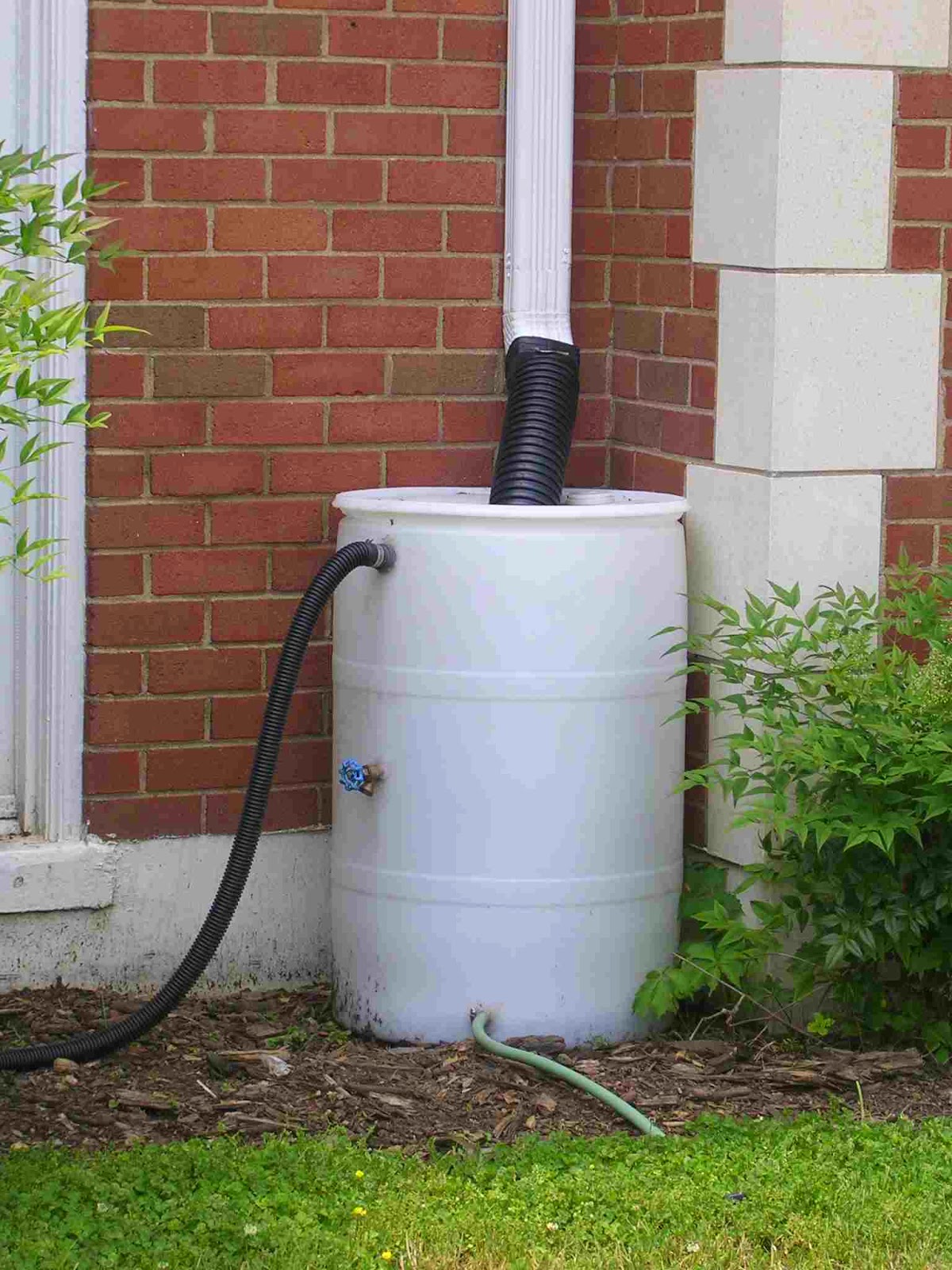
These are manufactured by Contain Rainwater Systems and have a few cool features; they have two ways that they can be mounted with one side having a rock looking texture and the other side having a modern look. They were simple to mount, even on this odd brick surface. There is a factory installed tap that a plastic spigot can thread into, and they can be linked together for larger capacity. They come in two colors and are in stock in quantity and available for prompt shipment. Please email about cost. If you mention the term " Emergency Water Storage " in your email you will receive a special introductory price. I am interested in dealers outside of California who wish to buy on a wholesale rate. Please contact myself or Eric.
Click the photo to enlarge


They are FDA approved safe for potable water and in addition to being an excellent option for rainwater harvesting where there is very little room I think they make a great option for emergency potable water storage. Large round barrels take up too much storage space, and these are designed to mount to a wall, out of the way. I am recommending that earthquake country people have one of these for each member of their family mounted in a cool dry place, such as a basement or garage. Each tank holds around 70 gallons which can be rationed to a comfortable three month supply per person. Water stores for a long time if not contaminated by an outside source but we suggest they be drained and refilled once a year.


We installed four in a breezeway on a house in Yorba Linda. The homeowner liked the idea that the 6'6" height provided added privacy. They are for use in case a large Earthquake disrupts Southern California water supply ( which is going to happen at some point ). As I have made other posts about The California Katrina and the Central valley delta system levee danger I will not belabor the point again but I cannot encourage people strongly enough to have some sort of collection and storage set up for an emergency water supply.
Eric Konechny is the United States division chief and designer of these tanks and I can personally attest to the fact that he will go above and beyond to help me get these tanks to you promptly. My business Rain Water Systems is an authorized distributor of these and other Rainwater Harvesting Products and my role is to not only test and install these systems but to train other small businesses in sales and installation and web marketing. Soon we will offer more instructional articles and DVD's as well as low cost websites purpose constructed to help market these products. These times require creativity and diversification. Trust me, in two years every scruffy gutter guy will be a rainwater harvesting expert. Not because of passion, but because the homeowner will be asking more and more for quotes on these products as it seeps into the conscious. The victors will be the companies that get experienced now and one way to do that is to offer these products to your clients now. Get a head of the curve.
Any rain gutter installation company is invited to call me on my cell and if you are in Southern California I will bring a display package to you and explain how it works and how I have been able to sell large systems. Gutter supply houses should consider hosting a seminar on harvesting rainwater; I will bring my educational display trailer with a pump, first flush device and different sizes of tanks from these new super slimline to a selection of round tanks from Bushman. I will go out with you or your customers on your first site evaluation or estimate and discreetly assist you in planning the system and pricing it. If you order your product through me I will come to your first installation and train your crew, for FREE. Who else is going to do that our has the experience, relationships and portfolio to back it up?


erick@contain.ca

Thursday, May 5, 2011

Rain Gardens

Rainwater harvesting systems can and should be tied into an irrigation system " zoned " to feed food bearing gardens. This is working well for us at our home in Southern California. It is true that we cannot rely solely on rain water as we are only collecting a small patio roof and we don't have enough room for a large system, but we have a pump that pulls the water from our rain barrels and the barrels are refilled with city water when they get depleted via a float switch. We enjoy fabulous vegetables and herbs and fruits and there is a certain magic from cultivation and using the food grown at home to create good meals.


This is a conceptual drawing of such a system; the cut away view inside the tank is meant to show the float switch. The overflow is directed into the grass to be absorbed into the soil, an outlet from the tank leads to the pump with feeds a irrigation manifold.

Our harvest currently is potatoes, green onions, strawberries, oregeno, sage, rosemarry and thyme. The mint just grows like mad and we may have to remove it.


We are waiting for bell peppers, tomatoes, corn and blueberries, grapes and squash and jalapenos. A summer variety that will yield more than we can eat. Here are some more photos of our rain garden; notice that we removed all the grass and have gravel between the food beds and the childrens play area is covered with wood chips. The only water that is used in our back yard is for the raised food beds, and a good portion of that comes from our rainwater harvesting system. It is important to live as we talk; to do as we encourage others to do. I personally will never have regular grass again. When the economy recovers and things aren't so scrunched we are going to do a total front yard make over and plant many more herbs and eliminate the grass there.
In the back ground you can just see the gutters that collect water from our roof.


The Tank Fed Food Beds are offered as a service to our clients along with the Gutter Gardens and rainwater harvesting systems. We are offering turf removal and drip systems and constructing patio container gardens for those willing to add rain barrels and catchment systems as the primary feed of water.
The Gutter Garden

Sunday, May 1, 2011

Rain Water Harvesting; How not to do it in Los Angeles

" Progressive gardeners who haven’t yet bought their barrel are made to feel wasteful and negligent for failing to acquire the latest in an endless series of products designed to save the planet. Thanks to relentless marketing, rain barrels are enjoying a potent dose of moral buzz that is fast turning them into a 21st Century version of the Great Tulip Mania. "


Disclaimer; I appreciate the efforts of those who have tried to create low cost and do-it yourself systems and do not mean to sound mocking. That being said, I think that the proliferation of make-do rain water harvest systems will ultimately create a bad impression on those considering using this technology. Further, the cheap rain barrels promoted by the various officials in Los Angeles are seen more and more often discarded as they do not have the crucial insect netting, an overflow and they are ugly. They look more like industrial vats used for storing chemicals and they are not what the average homeowner would want to see up against their house in Southern California. I would further argue that small cheap rain barrels are not green as they are often thrown away into landfills after a season or two.
As I share a common goal with other activists who want promote this micro-economy ( or mega trend ) I wanted to present this; How NOT to Harvest Rainwater in Los Angeles.

Example #1


This is a well crafted system with a solid block foundation, high quality plumbing fittings. My issue is that if this were placed on the side of a Malibu home the neighbors would at the least not be inspired to do a rain water harvesting project in their own yard. In fact, they probably would file a complaint. In certain parts, people might mistake it for a still making Moonshine. It is just not aesthetically pleasing.


This is contestant number two.  This tilting, industrial looking contraption is placed right next to the entry sidewalk.Perhaps eventually the bushes will grow around it.


Example 3


Plastic bottle downspout leads to rain barrel. Just...ick.

The average small home in L.A. yields 8,000 gallons, minimum, per year of rain water. A system should start at one thousand gallons, be designed to be aesthetically pleasing and be the primary source of irrigation water for the landscaping. A float valve is used to keep enough water in the tank(s) between rains to allow them to be used year-round with a water conserving irrigation design.
1,100 Gallon cistern in El Cajon, Ca


620 Gallon Slim Tank, Orange, CA


 Nothing is without its trial and errors.  
If the drought continues, the costs of these systems will increase dramatically.


Rain water harvest systems we have installed can be viewed here and are now located in Orange, Yorba Linda, Tustin, Anaheim, La Canada Flintridge, Huntington Beach, Costa Mesa, Los Angeles, North San Diego, Hollywood, Fountain Valley and Newport Beach and MORE! We are fully licensed for seamless gutter work. Rainwater harvesting locations recently in La Mesa, National City, Encinitas, Escondido, Carslbad, Hollywood, Temecula, Point Loma and MORE.


Wednesday, April 20, 2011

First Flush Devices


The results of water quality tests. First flush verses no first flush.
The center pipe is a " first flush device ". It contains the first few gallons of rain water that have a higher bacteria content and solids that may create sediment in your rain water harvest system.


The effects on water quality are non-existent if your intention is to drink the water.


Our subjects were one home with half round gutters, a high quality gutter screen and no first flush and a home with regular ogee style gutters, no screen, but a first flush device.When using a standard test kit used to detect coliform bacteria we found that tanks connected with first flush devices and those without both had contamination. Coliform bacteria are those nasty little critters that make you have to run to the bathroom.
We used kits supplied to the missionary teams at www.peacewater.org to test two rain water harvesting systems installed in Southern California. The test was a simple pass or fail test. If the bags turned black, they were unfit for human consumption. Our subjects were one home with half round gutters, a high quality gutter screen and no first flush and a home with regular ogee style gutters, no screen, but a first flush device.


First flush devices are effective at minimizing sediment in rain tanks.

I always recommend a first flush device as part of a complete system. In this economy I am sensitive to the economic realites and I suggest the customer start with as large a tank as they have space for, as the MATH usually overwhelms are homeowners ability to store water.

By that I mean to make rain water harvesting be practical you need larger storage systems, to make it through dry months. However, few homeowners have the real estate, or space, to store the amount of water that comes off your roof. Therefor, the amount of water coming off your roof will be greater than the average ability to store.

That basic equation again; if you have ten inches of rain per year and you have one thousand square feet of roof your yield of rain water will be about 7,300 gallons per year ( and 7,300 gallons per year is 20 gallons averaged per day over 365 days ). So, a storage system of about one thousand to three thousand gallons seems optimal for a home in a climate that gets ten inches of rain per year. As a large above ground system may between one a five thousand dollars my suggestion is that the homeowner look at their rain water harvesting system as modular; get the largest tanks and best rain gutters you can afford and add a pump, first flush, gutter screen later if that is required due to budget constraints. If you " daisy chain " multiple tanks together be sure to offer the clients optional ball valves between each tank. This allows individual tanks to be cleaned or moved without having to drain the whole system.

Then we let the bag sit at room temp for two days. The results were disconcerting, because the tech team at www.peacewater.org are trying to see if this technology can be used to provide drinking water for people who have no reliable source of clean water.

The results of the Hach tests were showing coliform bacteria in both samples. So we proved the water is unsafe to drink without filtration, but technical data done by other entities indicate that first flush devices help reduce other types of measurable contaminations including solids that create sediment inside large rain cisterns or tanks.
For emergency filtration of rain water for drinking I recommend you purchase a Sawyer type filter and have clean buckets ready in kit, or have stove and fuel to boil the water.


As far as the water quality of rain water for gardening it seems obvious that the plants love the chemistry of the bird dropping and other biomass that make up the sediment of a large rain tank. My final opinion is that the priorities should be having large tanks first, a filtration system secon and a distribution system, like a pump, last.

There are companies producing high quality first flush devices for sale such as www.rainharvesting.com. I really admire their under ground first flush diverters and the technical data they have assembled.